
The SIM Registration Act (Republic Act 11934) is the Philippine law that requires every mobile SIM card user, prepaid or postpaid, Filipino or foreign national, to register their SIM with their telecom provider. It is not optional. Unregistered SIMs are permanently deactivated by law. This complete 2026 guide explains what the law is, why it exists, who it covers, what happens if you do not comply, and exactly what your rights are as a registered subscriber.
Whether you are a TM user, Globe subscriber, Smart customer, or DITO user, this law applies to you.
What Is the SIM Registration Act?
The SIM Registration Act, officially known as Republic Act 11934, is a Philippine law signed by President Ferdinand Marcos Jr. on October 10, 2022. It took effect immediately upon signing and became one of the most significant telecommunications laws in Philippine history.
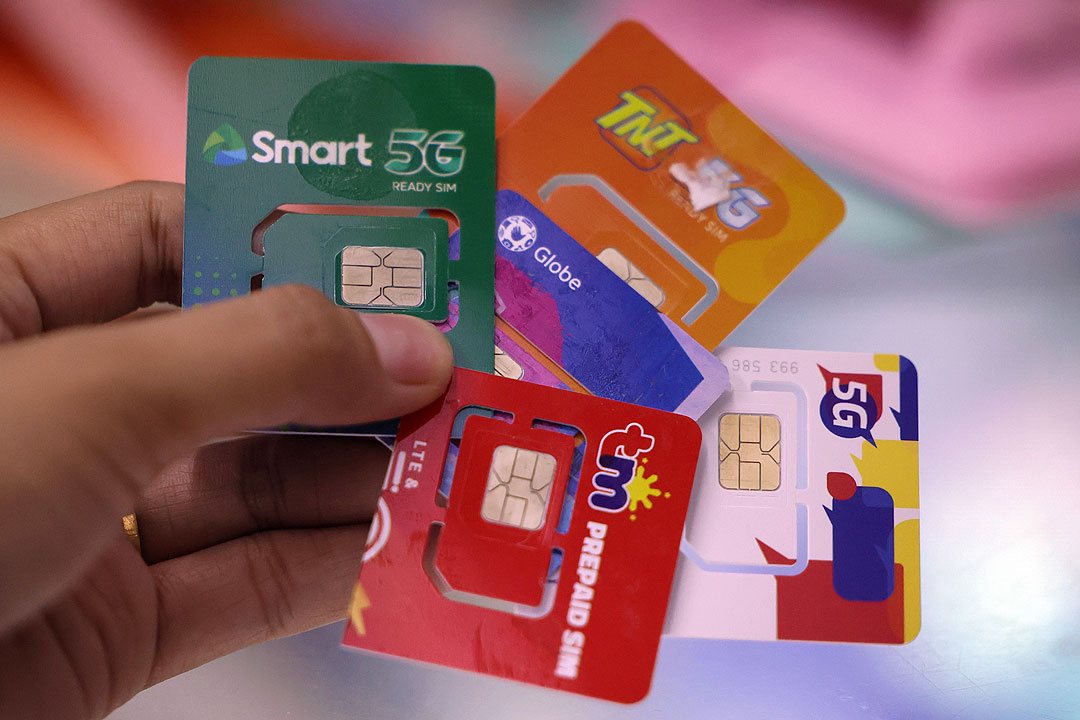
The law requires all Public Telecommunication Entities (PTEs) — including Globe Telecom, PLDT/Smart, DITO Telecommunity, and all their sub-brands like TM, TNT, and Sun Cellular — to collect and verify the identity of every SIM card user before granting full access to mobile services.
Before this law, anyone could buy a prepaid SIM card anonymously with no identification required. This made prepaid SIMs the tool of choice for scammers, text-based fraud, kidnapping syndicates, and illegal gambling operations across the Philippines.
The SIM Registration Act ended anonymous SIM ownership permanently.
Why Was the SIM Registration Act Passed?
The Philippine Congress passed RA 11934 in direct response to a dramatic rise in SIM-enabled crimes that caused real harm to millions of Filipinos. The key problems the law was designed to solve:
Text Scams and Financial Fraud
- Millions of Filipinos received scam text messages daily — fake parcel delivery notices, fake bank alerts, fake job offers, and phishing links — all sent from anonymous prepaid SIMs. Because senders could not be traced, victims had no legal recourse and scammers faced zero consequences.
SIM-Based Kidnapping and Extortion
- Criminal groups used anonymous SIMs to contact families of kidnapping victims, negotiate ransoms, and coordinate criminal activities. Tracing these communications was nearly impossible without registered identity data.
Illegal Gambling Operations (Jueteng and Online)
- Illegal gambling syndicates used prepaid SIMs to communicate with collectors and bettors across the country while evading law enforcement.
Political Disinformation
- Anonymous SIM cards were used to spread coordinated disinformation campaigns during elections — sending mass political text messages that could not be traced to any verified individual or organization.
OTP Fraud and Account Takeovers
- Fraudsters used anonymous SIMs to receive OTPs (one-time passwords) for accounts they had stolen, draining bank accounts and e-wallets without any way to identify the perpetrator.
The SIM Registration Act directly addresses all of these by making every SIM traceable to a verified identity.
Key Provisions of RA 11934
Mandatory Registration for All Users
Every SIM card in the Philippines — existing or new — must be registered under a verified government-issued identity. This applies to:
- All prepaid subscribers (TM, Globe, Smart, TNT, DITO, Sun, and all other brands)
- All postpaid subscribers
- Filipino citizens
- Foreign nationals residing in or visiting the Philippines
- Businesses and organizations using SIM cards
Registration Deadline
- The original deadline for registering existing SIM cards was April 26, 2023, extended from the initial December 27, 2022 deadline after public demand. SIM cards purchased after the law took effect must be registered at the time of purchase or activation — there is no grace period for new SIMs.
Deactivation of Unregistered SIMs
- Any SIM card not registered by the deadline was permanently deactivated. Telecom providers were legally required to cut off service to all unregistered numbers. In 2026, this enforcement remains active — any new SIM not registered promptly will be deactivated.
Data Privacy Protection
- The law explicitly requires telecom companies to protect all registered subscriber data under the Data Privacy Act of 2012 (RA 10173). Your registration information cannot be sold, shared with third parties, or used for commercial purposes. It can only be accessed by law enforcement agencies with a valid court order.
Foreign Nationals
- Foreign nationals must register using their passport, visa, and Alien Certificate of Registration (ACR) card. The validity of their registered SIM matches their visa duration. When a visa expires, the associated SIM is deactivated unless renewed.
Minors
- SIM cards for users under 18 years old must be registered under a parent or legal guardian. The guardian assumes legal responsibility for the minor’s SIM usage.
Business and Bulk Registration
- Companies registering SIM cards for business use must provide their DTI or SEC registration documents, a board resolution or Special Power of Attorney, and a list of employees assigned to each SIM.
What Information Is Collected During SIM Registration?
When you register your SIM, your telecom provider collects and stores the following:
Personal Information:
- Full legal name
- Date of birth
- Gender
- Complete home address with postal code
- Mobile number being registered
Identity Verification:
- Government-issued ID type and number
- Photo of the government-issued ID
- Facial verification selfie
For Businesses:
- DTI or SEC registration certificate
- Authorized representative’s ID
- Board resolution or Special Power of Attorney
All of this data is stored in secure, encrypted databases maintained by the telecom provider and the National Telecommunications Commission (NTC). Under the Data Privacy Act, this data cannot be accessed without a valid court order.
Accepted Government IDs for SIM Registration in 2026
Any one of the following government-issued IDs is accepted:
- Philippine National ID (PhilSys)
- Passport
- Driver’s License
- UMID Card
- SSS or GSIS Card
- PRC ID
- Voter’s ID
- Senior Citizen’s Card
- PWD Card
- NBI Clearance
- Police Clearance
- TIN ID
- IBP ID
- OWWA ID
- Firearms License
- Postal ID
💡 The Philippine National ID (PhilSys) is the most recommended ID for SIM registration in 2026 because it is universally accepted, government-issued, and contains all required information in a machine-readable format.
Penalties Under the SIM Registration Act
RA 11934 carries serious criminal and civil penalties for violations. Here is a full breakdown:
Penalties for Individuals
| Violation | Penalty |
|---|---|
| Providing false registration information | ₱100,000 to ₱300,000 fine + 6 months to 2 years imprisonment |
| Registering a SIM under another person’s identity without consent | ₱200,000 to ₱500,000 fine + 6 months to 2 years imprisonment |
| Using a registered SIM to commit a crime | Maximum penalty for the underlying crime + additional penalties under RA 11934 |
| Selling unregistered SIM cards | ₱100,000 to ₱300,000 fine per SIM sold |
Penalties for Telecom Companies
| Violation | Penalty |
|---|---|
| Failure to collect registration data | ₱100,000 to ₱1,000,000 fine per day of violation |
| Failure to deactivate unregistered SIMs | ₱100,000 to ₱1,000,000 fine per day |
| Unauthorized disclosure of subscriber data | ₱500,000 to ₱2,000,000 fine + license suspension |
| Allowing activation of unregistered SIM | ₱50,000 to ₱200,000 fine per SIM |
Penalties for Resellers and Distributors
- Any retailer, reseller, or authorized distributor caught selling SIM cards without verifying buyer identity or collecting registration information faces fines of ₱100,000 to ₱300,000 per violation and potential revocation of their distribution license.
Your Rights as a Registered SIM Subscriber
The SIM Registration Act does not just impose obligations — it also grants you important rights:
Right to Data Privacy
- Your registration information is protected by the Data Privacy Act of 2012. It cannot be sold, shared, or used commercially. Telecom companies must implement strict data security measures to protect your information.
Right to Know How Your Data Is Used
- You have the right to ask your telecom provider exactly how your registration data is stored, protected, and accessed. They are legally required to respond.
Right to Correction
- If you discover an error in your registered information, you have the right to request a correction. Visit any Globe, Smart, or DITO store with your valid ID to update your details.
Right to Complaint If you believe your registered data has been misused, breached, or unlawfully accessed, you can file a complaint with:
- The National Privacy Commission (NPC): privacy.gov.ph
- The National Telecommunications Commission (NTC): ntc.gov.ph
Right to Lawful Access Only Law enforcement agencies can only access your registration data with a valid court order. No government agency can access your SIM registration data without judicial authorization.
How the SIM Registration Act Is Enforced in 2026
In 2026, enforcement of RA 11934 is active and ongoing. Here is how it works in practice:
New SIM Purchases
- Every new SIM card sold in the Philippines must be registered at the point of sale or immediately upon activation. Retailers are required by law to verify buyer identity before completing a sale.
Ongoing Monitoring
- The NTC regularly audits telecom companies to ensure compliance. Telcos must submit periodic reports on registration rates and deactivation of non-compliant SIMs.
Law Enforcement Access
- When a crime involving a mobile phone is reported, law enforcement can apply to a court for access to SIM registration data. This has already led to the arrest and prosecution of numerous scammers, fraud syndicates, and criminals who previously operated anonymously.
SIM Replacement After Deactivation
- If your SIM was deactivated due to non-registration or an enforcement action, you can apply for a replacement SIM at your telecom provider’s store. The new SIM will be issued only after complete identity verification.
SIM Registration Act vs Data Privacy Act — Are They in Conflict?
This is one of the most common concerns Filipinos raise about the law. Here is the clear answer:
No — they are designed to work together.
The SIM Registration Act requires identity collection. The Data Privacy Act governs how that data is protected and used. RA 11934 explicitly references the Data Privacy Act and requires all telecom providers to comply with its provisions when handling registration data.
Key protections the Data Privacy Act adds to your SIM registration data:
- Data must be stored in encrypted, secure systems
- Access is strictly limited to authorized personnel
- Data breaches must be reported to the National Privacy Commission within 72 hours
- Data must be disposed of securely when no longer needed
- You have the right to access and correct your own data at any time
Impact of the SIM Registration Act in 2026
Since the law took effect in 2022, the results have been measurable:
Reduction in Text Scams
- Reports of SIM-based text scams dropped significantly in the years following mandatory registration. The ability to trace SIM cards to verified identities created a powerful deterrent for would-be scammers.
Successful Criminal Prosecutions
- Multiple high-profile scam syndicates and fraud operations have been dismantled using SIM registration data as evidence. Cases that previously could not proceed due to lack of suspect identification are now moving through the courts.
Increased Subscriber Accountability
- With every SIM linked to a verified identity, mobile network users in the Philippines now operate with a level of accountability that did not exist before 2022.
Challenges Remaining
- Critics of the law note that determined criminals can still obtain SIMs fraudulently using stolen IDs. The NTC and telecom providers continue to strengthen facial verification and ID authentication systems in 2026 to address this gap.
How to Register Your TM SIM Under RA 11934
If you have not yet registered your TM SIM card, do it now. It takes 5–10 minutes and is completely free.
Three ways to register:
- Online Portal — Visit simreg.globe.com.ph on any device
- GlobeOne App — Download from the Play Store or App Store, tap Register Your SIM
- Globe Store — Walk in with your valid ID for assisted registration
💡 For the complete step-by-step guide covering every method, accepted IDs, special cases, and error fixes — read our full TM SIM Registration Guide.
Frequently Asked Questions
Is SIM registration mandatory for all networks in the Philippines?
Yes. RA 11934 applies to all Public Telecommunication Entities — Globe, TM, Smart, TNT, DITO, Sun Cellular, and every other network operating in the Philippines.
What happens if I give false information during SIM registration?
You face a fine of ₱100,000 to ₱300,000 and imprisonment of 6 months to 2 years. The law treats false registration as a serious criminal offense.
Can the government read my text messages because of SIM registration?
No. SIM registration only links your number to your identity. It does not give the government access to your message content. Accessing message content requires a separate legal process under existing wiretapping and surveillance laws.
What if my registered SIM is lost or stolen?
Report it immediately to your telecom provider by calling their hotline. For TM: call 8080. They can deactivate the lost SIM to prevent misuse of your registered identity. You can then get a replacement SIM linked to your registration.
Can I have multiple SIM cards registered under my name?
Yes. RA 11934 allows individuals to register multiple SIM cards. The law sets a maximum of 10 SIM cards per person across all networks combined.
Is my SIM registration data safe from hackers?
Telecom providers are legally required under the Data Privacy Act to protect your data with industry-standard security measures. However, no system is completely immune to breaches. If a breach occurs, the telecom company must notify you and the National Privacy Commission within 72 hours.
What is the NTC’s role in the SIM Registration Act?
The National Telecommunications Commission (NTC) is the government agency responsible for overseeing and enforcing RA 11934. It audits telecom companies, investigates complaints, and imposes penalties for non-compliance.
Can foreigners be exempt from SIM registration?
No. Foreign nationals are required to register their SIM cards using their passport, visa, and ACR card. There are no exemptions based on nationality.
References and Helpful Links
| Resource | Link |
|---|---|
| SIM Registration Act — Full Text (RA 11934) | Official Gazette of the Philippines |
| SIM Registration Act — Wikipedia | en.wikipedia.org/wiki/SIM_Registration_Act |
| National Telecommunications Commission (NTC) | ntc.gov.ph |
| National Privacy Commission (NPC) | privacy.gov.ph |
| DICT SIM Registration Advisory 2023 | dict.gov.ph |
| TM SIM Registration Portal | simreg.globe.com.ph |
| TM SIM Registration — Complete Guide | [Your homepage link here] |
| GlobeOne App Guide 2026 | [Your Article 2 link here] |
| Data Privacy Act RA 10173 | privacy.gov.ph/data-privacy-act |
